
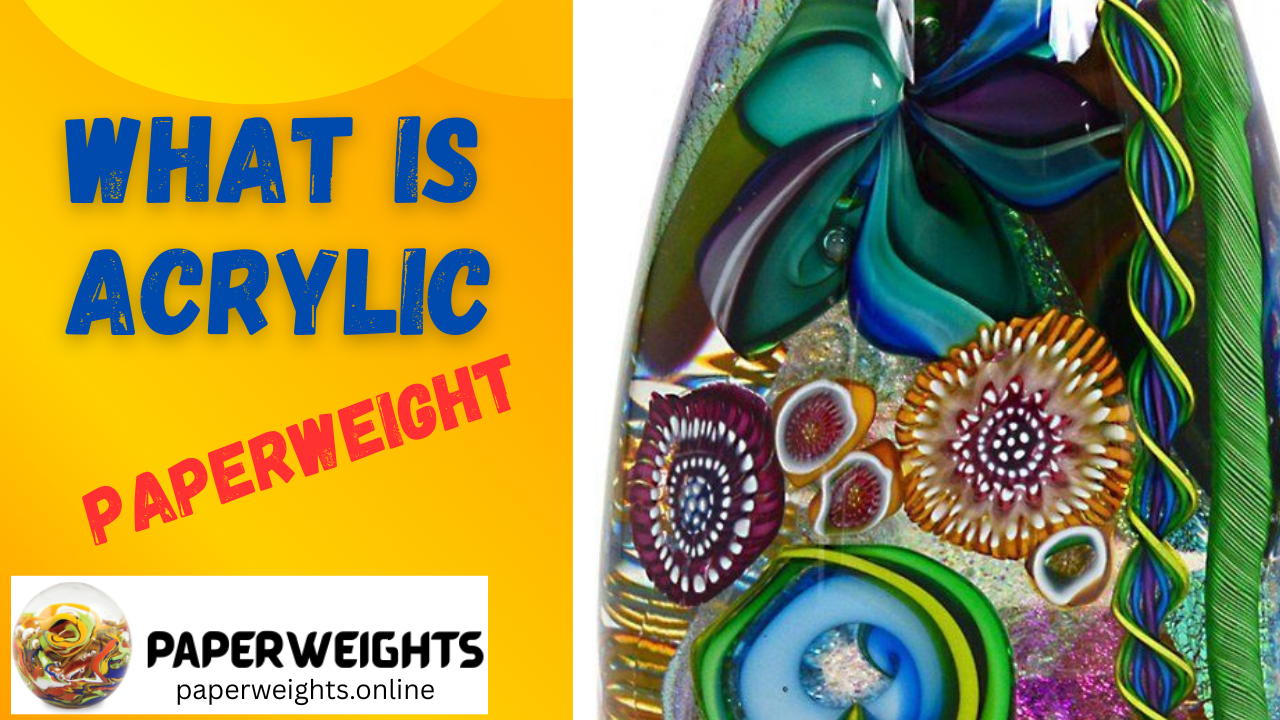
Most of the people confused between acrylic and plastic, we will discus here about acrylic in detail so you will be able to identify the acrylic easily.
Alright, let’s chat about something you might find holding down papers on a desk, but with a modern twist – acrylic paperweights! Maybe you’ve seen them – those super clear blocks, sometimes with something cool floating inside like a bug or a flower? They’re definitely different from the heavy glass ones your grandparents might have. So, What is an Acrylic paperweight exactly, and what’s the deal with them?
You’ve probably encountered acrylic before, maybe without even realizing it (hello, plexiglass!). When it comes to paperweights, acrylic offers some really unique possibilities that traditional materials like glass or metal just can’t match. Understanding What is an Acrylic paperweight helps you appreciate these often overlooked desk accessories that blend function with a bit of modern magic. They’re lighter, often tougher in some ways, and can trap little treasures inside in a way that’s almost futuristic. Let’s dive in and see what makes these clear wonders tick.
What’s Acrylic Anyway?
Before we get deep into the paperweights themselves, let’s quickly talk about the material. “Acrylic” is basically the common name for a type of plastic called poly(methyl methacrylate) or PMMA. Yeah, science names are a mouthful, right? Just think of it as a strong, clear plastic.
Its key features are:
- Super Clear: It can be incredibly transparent, often even clearer than standard glass when new.
- Lightweight: Compared to glass of the same size, acrylic is significantly lighter.
- Shatter-Resistant: This is a big one. Unlike glass, which shatters dramatically when dropped, acrylic is much tougher. It might crack or chip under extreme impact, but you won’t get those dangerous shards flying everywhere.
- Moldable: When heated or in its liquid resin form, acrylic can be poured into molds to create all sorts of shapes.
It starts as either solid sheets that can be cut and polished or as a liquid resin that hardens (cures) when mixed with a catalyst, often becoming crystal clear in the process. This liquid-to-solid thing is key to acrylic’s coolest trick…
The Magic Trick: Embedding Stuff Inside!
This is where acrylic paperweights really stand out from the crowd. Because you can start with liquid acrylic resin, you can place objects into the mold and then pour the liquid acrylic over them. When it hardens, voilà! The object is perfectly suspended inside the clear block, seemingly floating in space. This process is often called encapsulation or embedment.
Think about the possibilities! What kind of stuff gets trapped in these acrylic time capsules?
- Nature’s Wonders (and Creepy Crawlies): This is super popular. You’ll often find:
- Insects: Scorpions, beetles, spiders, butterflies… preserved in perfect detail. Kinda creepy, kinda cool, definitely a conversation starter!
- Flowers & Plants: Delicate dried flowers, four-leaf clovers, interesting leaves, or even fluffy dandelion seed heads (those “wishies”) captured before they blow away.
- Seashells & Marine Life: Small shells, starfish, seahorses (usually ethically sourced!).
- Man-Made Objects:
- Coins & Stamps: A neat way to display collectibles.
- Gears & Watch Parts: Gives off a cool “steampunk” or industrial vibe.
- Company Logos & Products: Businesses love acrylic paperweights for promotional items. They can embed a miniature version of their product or a printed logo right inside. Think of a tiny car for a dealership or a circuit board for a tech company.
- Photos: Sometimes specially treated photos can be embedded, though this is less common than other objects.
- Abstract & Fun Stuff:
- Glitter & Confetti: Adding sparkle and color.
- Colored Swirls: Injecting dyes into the liquid acrylic before it hardens can create beautiful patterns.
- Small Trinkets: Anything small and interesting can potentially be embedded.
Imagine finding a perfect four-leaf clover. Instead of pressing it in a book where it gets forgotten, you could (hypothetically, with the right materials and know-how!) embed it in an acrylic block. Now you’ve got a permanent lucky charm sitting on your desk, perfectly preserved and visible from all angles. That’s the unique appeal of What is an Acrylic paperweight – it can be a tiny, personal museum.
Not Just Bugs in Blocks: Other Acrylic Styles
While embedding objects is acrylic’s signature move, these paperweights come in other styles too:
- Shapes Galore: Because it’s moldable, acrylic isn’t limited to just rectangular blocks. You’ll find them as:
- Spheres: Crystal-ball-like paperweights.
- Pyramids: Sleek and geometric.
- Cubes: Simple and modern.
- Custom Shapes: Logos, animals, hearts… you name it, it can probably be molded if the design isn’t too complex.
- Color Infusion: Acrylic doesn’t have to be clear! It can be dyed virtually any color imaginable, from solid opaque hues to vibrant transparent shades like ruby red or sapphire blue. Sometimes different colors are swirled together before hardening.
- Surface Finishes: While high polish is common for that crystal-clear look, acrylic can also have a frosted or matte finish for a softer appearance.
- Purely Geometric/Abstract: Some acrylic paperweights don’t have anything embedded. Their appeal comes from the purity of the shape, the color, or the way light plays through the material itself. Think of a perfectly polished cube of transparent blue acrylic – simple but striking.
Acrylic vs. Glass Paperweights: The Showdown
So, acrylic sounds pretty cool, but how does it stack up against the traditional champ, glass? They each have their pros and cons.
| Feature | Acrylic Paperweight | Glass Paperweight | The Lowdown |
| Material | Plastic (PMMA) | Glass (Silica-based) | One’s plastic, one’s… well, glass. |
| Weight | Lighter | Heavier | Acrylic feels less substantial, glass has that satisfying heft. |
| Clarity | Excellent (can be >92% light transmission) | Very Good (can have slight green tint) | Both are super clear, acrylic might look slightly clearer initially. |
| Durability | Shatter-resistant, less likely to break | Brittle, shatters easily when dropped | Drop acrylic, it might scuff. Drop glass, get the dustpan. |
| Scratch Resistance | Lower (scratches more easily) | Higher (resists minor scratches better) | This is acrylic’s weak spot. Be careful with sharp objects! |
| Encapsulation | Excellent (easy to embed objects) | Difficult/Impossible (usually) | Acrylic wins hands-down for trapping things inside. |
| Cost | Often more affordable, esp. custom | Can range from cheap to very expensive | Basic acrylic is usually cheaper; high-end glass art is pricey. |
| Feel/Perception | Modern, versatile, practical | Classic, traditional, sometimes seen as more “premium” | Depends on your taste! Glass has history, acrylic has modern flexibility. |
| UV Resistance | Can yellow over time (older/cheaper types) | Generally stable | Look for UV-resistant acrylic if it’ll be in sunlight a lot. |
Think about it like this: Imagine you’re working at a busy desk, maybe occasionally knocking things over (we’ve all been there!). An acrylic paperweight is less likely to break if it takes a tumble off the edge. But, if you slide it across a surface with some grit on it, it’s more likely to pick up fine scratches than a glass one would. It’s a trade-off!
Why Pick Acrylic? The Upsides
Okay, so why might you specifically choose an acrylic paperweight?
- Toughness: If it’s going to be handled a lot, used in a place where things might get dropped (kids’ room? busy office?), or even travel, acrylic’s shatter resistance is a huge plus.
- Weight Savings: If you prefer something lighter or need to ship it (like for promotional items), acrylic is much lighter than glass.
- Crystal Clear Views: Especially for those embedded objects, the high clarity of acrylic gives you a perfect, unobstructed view from all sides.
- Endless Possibilities: The ability to embed almost anything makes them incredibly versatile for personalization, gifts, awards, or promotional products. Want your company logo floating in the middle? Acrylic can do that easily.
- Price Point: Generally, especially for custom shapes or embedded items in bulk, acrylic can be more cost-effective than commissioning custom glasswork.
- Safety: No sharp shards if it does happen to break makes it a safer option in some environments.
Any Downsides? (Things to Consider)
Acrylic isn’t perfect. Here are a few things to keep in mind:
- The Scratch Factor: This is the big one. Acrylic surfaces can scratch more easily than glass. You need to be a bit more careful about sliding it on rough surfaces or cleaning it with abrasive materials. Fine scratches can make it look dull over time.
- Potential Yellowing: While modern acrylics have much better UV resistance, older or cheaper formulas could yellow slightly if exposed to direct sunlight constantly over many years. Keeping it out of intense, direct sun is always a good idea.
- The Feel: Some people just prefer the cold, heavy feel of glass. Acrylic feels warmer and lighter, which might feel less “premium” or substantial to certain folks.
- Collector Appeal: While people definitely collect cool acrylic pieces (especially vintage ones with interesting embedments), the high-end art paperweight market is still dominated by glass. Acrylic is often seen as more modern and functional than heirloom-quality.
Keepin’ It Clear: Caring for Your Acrylic Paperweight
Good news – they’re pretty low maintenance!
- Cleaning: Just use a soft cloth (microfiber is perfect) and maybe some mild soap and water if needed. Rinse and dry with another soft cloth. Never use abrasive cleaners, scouring pads, or ammonia-based cleaners (like some window cleaners) – they can cloud or scratch the acrylic.
- Scratches: Minor surface scratches can often be buffed out using special acrylic polishes (like those used for plastic watch crystals or headlights). Deep scratches are harder to fix.
- Sunlight: Try to avoid leaving it in direct, harsh sunlight day after day, just to be safe regarding potential long-term yellowing (though again, modern acrylic is pretty good!).
So, What’s the Verdict on Acrylic Paperweights?
What is an Acrylic paperweight? It’s a modern, versatile, and often fun take on the traditional desk accessory. Made from clear, lightweight, and durable plastic, its standout feature is the amazing ability to encapsulate objects, freezing them in time within a crystal-clear block.
Whether you’re drawn to the creepy-coolness of an embedded insect, the beauty of a preserved flower, the sleekness of a geometric shape, or the practicality of a shatter-resistant desk weight, acrylic offers something unique. It might not have the centuries-old artistic tradition of glass, but it brings its own brand of magic and practicality to the table (or desk!). They’re proof that even simple objects can be reimagined in cool and surprising ways.
Got Questions? Acrylic Paperweight FAQs
Q1: Can you really embed anything in acrylic?
Almost! The main limitations are moisture and size. The object needs to be completely dry, as any moisture can cause cloudiness or bubbles when the acrylic cures (hardens). Also, it obviously has to fit within the mold size. Things that might rot or decay quickly are generally not suitable unless specially treated/dried. But dried flowers, insects, plastic items, metal objects, coins, etc., are usually fair game!
Q2: Do acrylic paperweights look or feel cheap compared to glass?
It really depends on the quality and design! A well-made acrylic paperweight with a flawless polish and an interesting embedment can look very sleek and high-quality. A poorly made one with visible seams, bubbles, or scratches might look less impressive. Because it’s lighter than glass, some people might perceive it as less “substantial,” but others appreciate the lighter weight. It’s often subjective.
Q3: How can I easily tell if a paperweight is acrylic or glass?
Here are a few clues:
- Weight: Acrylic is noticeably lighter than glass of the same size.
- Tap Test: Gently tap it with your fingernail. Acrylic often has a duller, softer “clunk” sound, while glass has a sharper, higher-pitched “clink.”
- Temperature: Acrylic usually feels warmer to the touch than glass, which tends to feel cool.
- Scratch Test (Careful!): If you can find an inconspicuous spot on the base, acrylic will scratch much more easily than glass if you gently try with a pin point (do this carefully and only if you own it!).
Q4: Are the chemicals used to make acrylic paperweights safe?
Once the acrylic resin is fully cured (hardened), it’s inert and perfectly safe to handle. The liquid components before curing can be hazardous and should only be handled by professionals or experienced crafters with proper safety gear (like gloves and ventilation). But the finished, solid paperweight is non-toxic.
Q5: Where’s a good place to find cool acrylic paperweights?
You can find them in lots of places!
- Online Marketplaces: Sites like Etsy often have artisans making unique ones with embedded flowers, gears, etc. Amazon and other online retailers have a wide selection.
- Gift Shops & Museum Shops: Often carry ones with local themes, natural embedments, or artistic designs.
- Promotional Product Companies: If you need custom ones with logos embedded (usually in bulk).
- Thrift Stores & Vintage Shops: You might find interesting older acrylic paperweights, especially from the 60s and 70s when encapsulations were really popular.
People Also Ask
Is Acrylic a Plastic?
Ever found yourself looking at a clear, glossy sign, a colorful piece of modern furniture, or even the protective barrier at a checkout counter and wondered, “What exactly is that stuff?” Chances are, you might be looking at acrylic. And then the next question often pops up: is acrylic a plastic? It’s a fair question, especially with so many different materials out there, and sometimes the lines can seem a bit blurry.
Well, let’s clear things up (pun totally intended!). The short answer is a resounding yes. But, like most things in life, there’s a bit more to it than a simple yes or no. Understanding what kind of plastic acrylic is, and what makes it special, can be pretty interesting and surprisingly useful.
So, What’s the Deal? Acrylic’s Place in the Plastic Family
Think of “plastic” as a really big, diverse family name. Within that family, there are lots of different individuals, each with their own unique characteristics and talents. Acrylic is one of those talented family members.
To get slightly more technical (but not too technical, I promise!), acrylic is a common name for a material called polymethyl methacrylate, often abbreviated as PMMA. PMMA is a type of thermoplastic. “Thermo-what?” you ask. Basically, thermoplastics are plastics that become soft and moldable when heated, and then solidify when cooled. This cool property means they can be shaped into all sorts of things!
So, yes, acrylic proudly wears the “plastic” badge. It’s a synthetic polymer, made from monomers derived from acrylic acid. But it’s not just any plastic; it has some pretty awesome qualities that make it a go-to choice for a huge range of applications.
Why Acrylic is Kind of a Big Deal
So, if acrylic is a plastic, what makes it stand out from the crowd of other plastics? Well, it’s got a few party tricks:
- Super Clear (Like, Really Clear): One of acrylic’s biggest claims to fame is its exceptional optical clarity. It’s often used as a lightweight and shatter-resistant alternative to glass because it can be just as transparent, sometimes even more so! Think about those crystal-clear display cases or picture frames.
- Tough Cookie (Mostly): While not as hard as glass, acrylic is significantly more impact-resistant. Drop a glass sheet, and you’ve got a mess. Drop an acrylic sheet of similar thickness, and it’s much less likely to shatter into a million dangerous shards. This makes it a safer choice in many situations.
- Weather Warrior: Acrylic holds up pretty well against the elements. It resists yellowing or becoming brittle from UV exposure much better than many other plastics, which is why you see it used for outdoor signs and glazing.
- Easy to Work With: Manufacturers love acrylic because it can be easily cut, drilled, bent with heat (thermoformed, remember?), and joined with adhesives. This versatility opens up a world of design possibilities.
- Colorful Personality: Acrylic isn’t just about being clear. It can be manufactured in a vast spectrum of transparent, translucent, and opaque colors. This makes it a favorite for everything from vibrant signage to eye-catching home decor.
Where You’ll Spot Acrylic in the Wild
Once you start looking, you’ll realize acrylic is pretty much everywhere! Here are just a few common places you’ll find this versatile plastic:
- Signs & Displays: From illuminated shop signs to those sleek point-of-sale displays.
- Windows & Skylights: Especially where safety or light weight is a concern (think airplane windows or shed skylights).
- Aquariums: Larger aquariums often use acrylic because of its strength and clarity.
- Furniture: Modern chairs, tables, and shelving often feature acrylic for a contemporary, airy look.
- Automotive Parts: Headlight covers, taillights, and interior components.
- Protective Barriers: Those clear screens you see in shops and offices? Often acrylic.
- Arts & Crafts: Hobbyists love it for everything from jewelry making to model building.
- Medical Devices: Certain components due to its biocompatibility and clarity.
The Not-So-Perfect Side: Things to Keep in Mind
No material is perfect, and acrylic has a couple of things to be aware of:
- Scratch Magnet: While tougher than glass in terms of shattering, acrylic can scratch more easily. So, you need to be a bit careful with cleaning – avoid abrasive cleaners or rough cloths.
- Not a Fan of Certain Chemicals: Some solvents and harsh chemicals can damage or craze acrylic, so always check compatibility before using strong cleaners.
Acrylic vs. Other “Clear Stuff”: A Quick Comparison
It’s easy to get acrylic mixed up with other clear plastics or even glass. Here’s a super-simplified way to think about it:
| Material | Key Characteristics | Typical “Feel” | Scratch Resistance | Shatter Resistance |
| Acrylic (PMMA) | Very clear, fairly strong, UV resistant, easily shaped | Relatively lightweight | Moderate | High |
| Polycarbonate | Extremely strong/impact-resistant, clear, UV resistant | Lightweight | Moderate-Low | Very High |
| Glass | Very clear, very hard, heavy | Heavy, cool to touch | Very High | Low |
| Polystyrene | Often clear but can be brittle, less durable | Lightweight, can feel flimsy | Low | Low-Moderate |
(This is a general guide; specific grades and treatments can alter properties!)
So, Is Acrylic a Plastic? The Final Verdict
Absolutely, 100% yes! Acrylic, or PMMA, is a specific and very useful type of thermoplastic. It’s prized for its clarity, strength (relative to its weight), and versatility, making it a star player in countless applications, from the mundane to the magnificent. It’s one of those materials that, once you know what it is, you start seeing it everywhere, quietly doing its job and looking good while doing it.
What about you? Now that we’ve cleared things up, have you spotted acrylic in an unexpected place recently? Or do you have a favorite acrylic item? Let us know in the comments below!
Further Reading (For the Extra Curious!):
- ACRYLITE® (Plexiglas) Manufacturer Information: Many manufacturers of acrylic sheeting, like the makers of PLEXIGLAS®, have detailed technical information and application guides on their websites. (A general search for “Plexiglas technical data” or “Acrylite properties” will yield good results from official sources).
- Society of Plastics Engineers (SPE): For those who really want to dive deep into polymer science, organizations like SPE offer extensive resources. (Website: www.4spe.org – explore their educational sections).